What Is a Multisig Wallet? Team Security for NFT Projects
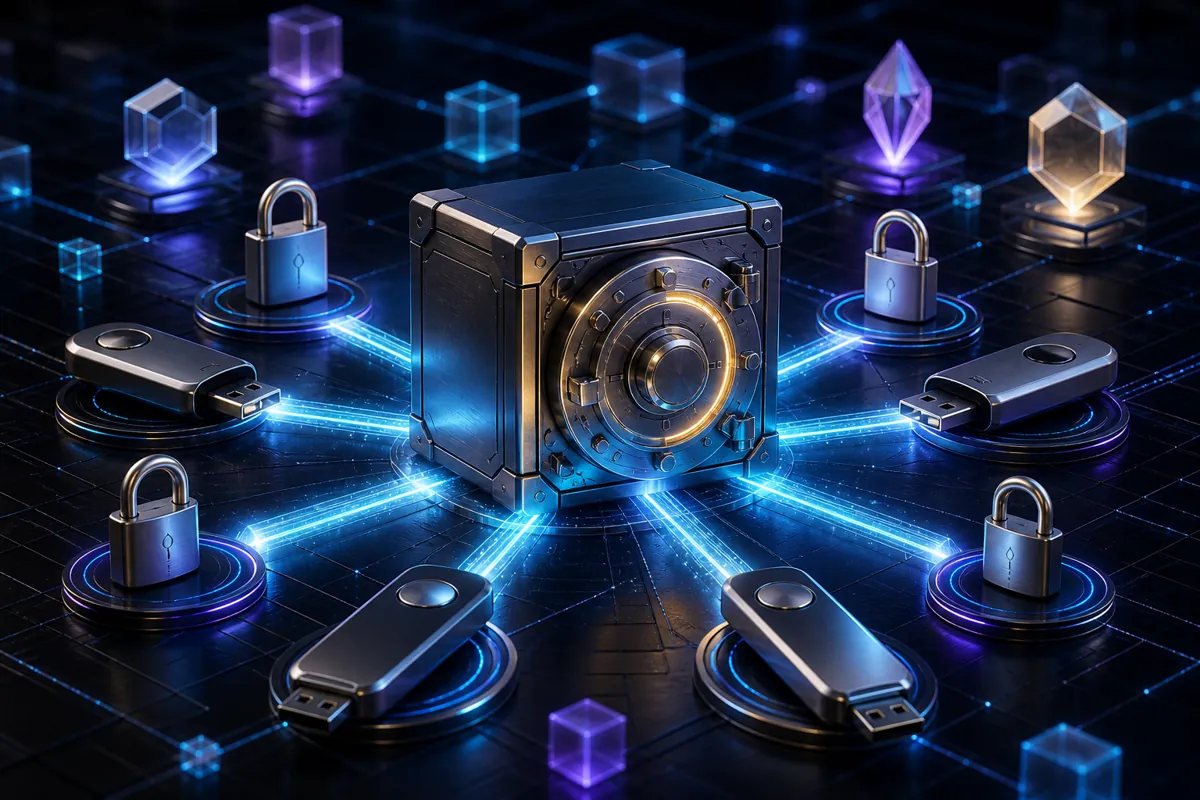
Table of Contents
What a Multisig Wallet Actually Is
A multisig wallet, short for multi signature wallet, is a smart contract wallet that requires more than one approval before it can move funds or interact with another contract. Instead of a single private key controlling everything, a multisig is set up with a group of owner addresses and a threshold, commonly written as M of N. If a wallet has five owners and a threshold of three, any transaction needs three of those five owners to approve it before it executes.
This matters for anyone minting or holding NFTs as part of a group rather than alone. A solo collector can rely on a single hardware wallet. A duo running a small collection, a studio splitting royalties between artists, or a DAO managing a shared treasury cannot, because a single lost or compromised key would put everything at risk.
How a Multisig Transaction Works
Using a multisig follows a consistent pattern regardless of which provider you use:
- Propose. One owner drafts a transaction, for example sending funds, minting from a shared contract, or transferring an NFT out of the wallet.
- Approve. Other owners review the proposed transaction and sign it if they agree. Each signature is recorded on chain or through the wallet’s interface.
- Execute. Once the required number of approvals is reached, any owner can trigger execution and the transaction runs.
Because the logic lives in an audited, open source smart contract rather than with a company or a single custodian, the group keeps self custody of its assets the entire time. No third party can move funds unilaterally, and no single member can either.
Why NFT Collections and Teams Use Them
Many NFT projects collect mint proceeds and secondary royalties into a treasury wallet meant to fund future development, giveaways, or community initiatives. A multisig ensures that no single team member can drain that treasury alone, and that spending decisions reflect agreement among the people responsible for the project.
Joint ownership of valuable assets
Some NFTs, particularly high value 1 of 1 pieces or blue chip collectibles, are co owned by a group of investors or collaborators. Holding that asset in a multisig means a sale or transfer needs sign off from everyone involved, not just whoever happens to have the seed phrase that day.
Reducing single points of failure
A single private key is a single point of failure. It can be lost, stolen through phishing, or exposed by a compromised device. A multisig spreads that risk across several independent keys, typically held on different devices or even different hardware wallets, so one bad day for one person does not mean the group loses access to its NFTs or funds.
What Multisig Wallets Can Hold
A multisig address behaves like any other wallet address on the network it is deployed to. It can hold the native token for gas, ERC-20 tokens, and both ERC-721 and ERC-1155 NFTs. That makes it usable not just for a general treasury but as the actual minting or holding wallet for an NFT project, provided the underlying contract and network support smart contract wallets as owners.
Trade-offs to Understand Before Setting One Up
Multisig wallets are not free of downsides, and it is worth weighing them honestly.
- Slower transactions. Waiting for multiple signers means routine actions take longer than a single key wallet, which can be a real friction point during a live mint.
- Coordination overhead. If a signer is unreachable, unresponsive, or leaves the project, transactions can stall until the group adjusts the owner list or threshold.
- Gas costs. Deploying and interacting with a multisig smart contract generally costs more gas than a standard wallet transaction, since more logic executes on chain.
- Setup complexity. Choosing the right threshold, verifying every owner address carefully, and testing the recovery process before real funds are involved all take time most solo creators do not need to spend.
For these reasons, a multisig makes the most sense once a project has real shared funds or jointly owned assets worth protecting. A single artist minting their own work generally does not need one, and a well secured hardware wallet is a better fit for that case.
Getting Started
If your project has grown to the point where more than one person controls funds or NFTs, look at an established, audited multisig provider such as Safe, choose a threshold that balances security against convenience, for example three of five rather than a full unanimous vote, and always test the setup with a small transaction before moving significant value into it. Keep a written record of who holds which key and how the group would replace a lost signer, since that plan is far easier to make in advance than to improvise during an emergency.
Whether you end up holding your collection in a single wallet or a shared multisig, minting itself should stay simple. Simple NFT Creator lets you prepare and mint your artwork from your phone in a few steps, available now on the App Store and Google Play.