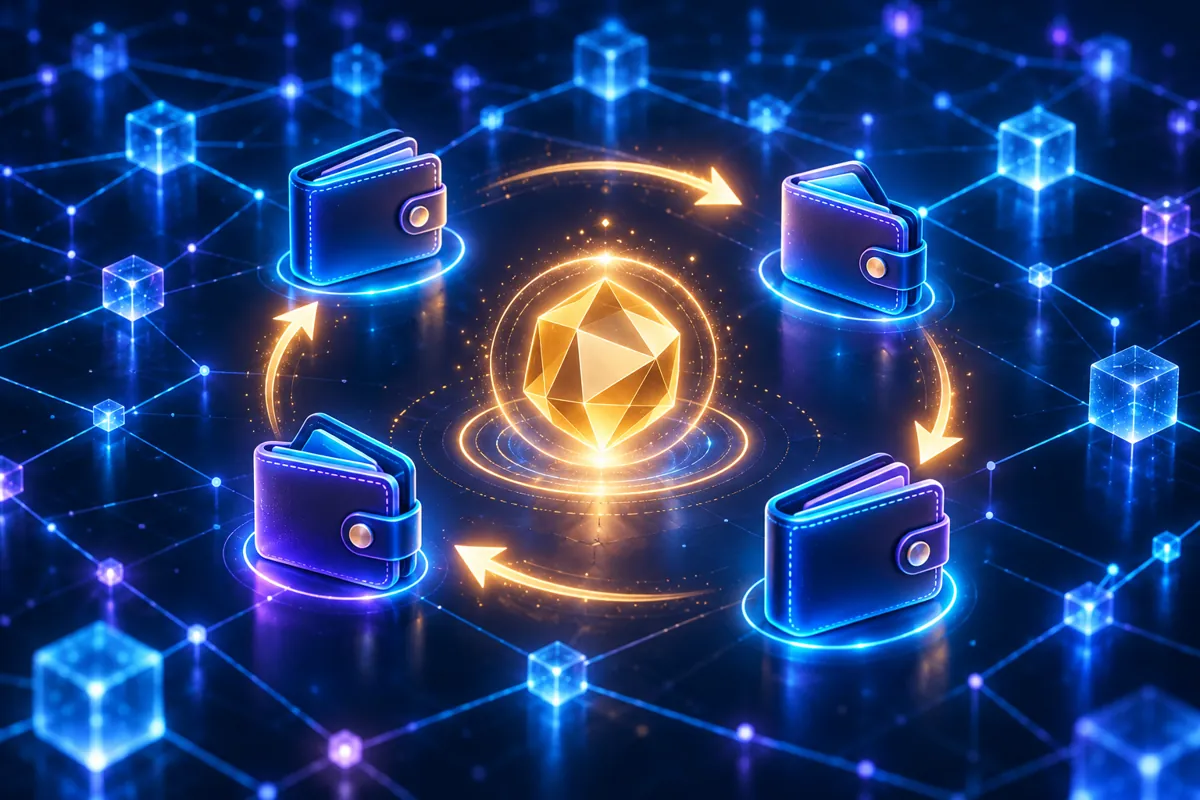
What Is ERC-1155? The Multi-Token NFT Standard Explained
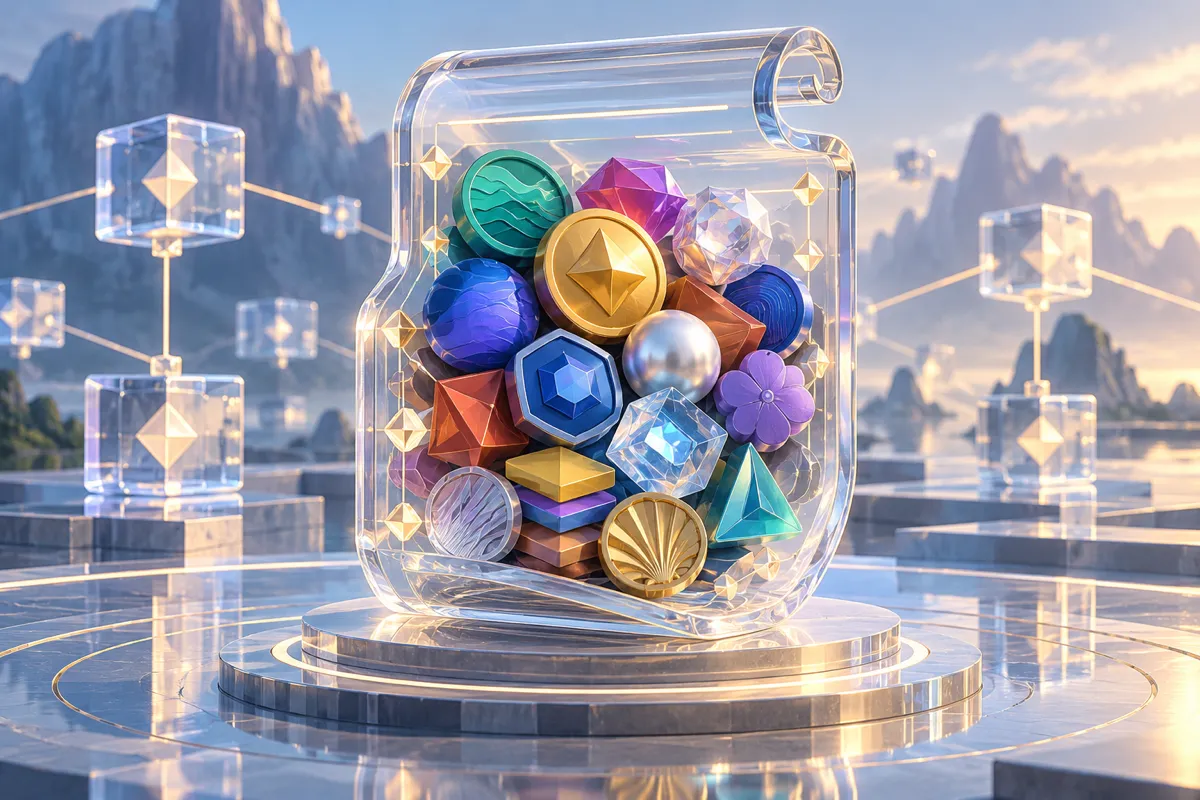
Table of Contents
If you have browsed NFT collections for long, you have probably seen the term ERC-1155 listed next to a project’s contract details. It sits alongside the more familiar ERC-721, but it solves a different problem. Understanding what it does can help you make sense of how editions, game items, and some collectible drops actually work under the hood.
What Is ERC-1155?
ERC-1155 is a token standard on Ethereum and other EVM compatible chains that lets a single smart contract manage many different token types at once. Each token type gets its own numeric ID inside that one contract, and each ID can behave as a fungible token, a one of a kind non-fungible token, or something in between, often called semi-fungible.
That last category is the one most relevant to NFT creators. A semi-fungible token under ID 7, for example, might represent 500 identical copies of the same digital artwork. Each copy is interchangeable with any other copy under that ID, similar to how currency works, but the artwork itself is still a distinct, ownable digital item, similar to how a one of one NFT works.
The Problem It Was Built to Solve
The standard was proposed by the Enjin team in 2018 and finalized as an Ethereum Improvement Proposal in 2019, originally for blockchain game development. Before ERC-1155 existed, a project that wanted to issue many different item types, say a game with ten in game currencies and forty categories of equipment, needed a separate contract for each one. That meant more code to audit, more addresses to track, and more gas spent deploying and managing all of it.
ERC-1155 consolidates all of that into a single contract. One deployment can hold an entire collection’s worth of token types, which simplifies both the development side and the experience of anyone interacting with that collection.
How It Differs From ERC-721
ERC-721 is the standard most people associate with NFTs. It is built around unique, one of one tokens: each token ID exists exactly once and has its own distinct metadata. It is a natural fit for single edition artwork, profile picture collections where every image is meant to be different, and anything else where uniqueness is the point.
ERC-1155 takes a different approach. Instead of one contract per unique item, it supports a mix of token types side by side. A single collection could include a limited edition piece with only one copy, an open edition piece with thousands of copies, and a separate badge or currency token, all managed by the same contract. This flexibility is why many open editions, gaming inventories, and multi tier membership collectibles are built on ERC-1155 rather than ERC-721.
Neither standard is strictly better. ERC-721 fits projects where every token must be one of a kind. ERC-1155 fits projects that need multiple copies of the same item, several different item types, or both.
Batch Transfers and Lower Gas Costs
One of the more practical benefits of ERC-1155 is its batch transfer function, commonly called safeBatchTransferFrom. It allows several token types to move between wallets in a single transaction instead of one transaction per token. For a creator distributing multiple items to a collector, or a collector moving an entire set of game items at once, this can meaningfully reduce the total gas paid compared to sending each token separately.
The same logic applies to minting. A project selling an open edition to thousands of collectors benefits from a standard that was designed around issuing many copies efficiently, rather than one built exclusively for unique, one at a time tokens.
Where You Will Actually See It
You will most often run into ERC-1155 in a few recurring situations: open edition drops where a piece is available to anyone for a limited time rather than in a fixed, unique supply; blockchain games, where inventories include weapons, skins, or resources that exist in many identical copies; tiered memberships or passes, where a collection sells several access levels from the same contract; and token gated communities that issue a badge type rather than a single unique collectible.
If you are minting your own NFTs through Simple NFT Creator, the standard your collection uses is largely handled for you, but it is worth knowing which one fits your idea. A series of 200 identical prints is a natural fit for a multi copy token type. A one of one piece you want to stay provably unique is a better fit for a single edition, non-fungible token.
Metadata Still Works Similarly
Metadata for ERC-1155 tokens follows the same general idea as other NFT standards: a JSON file describing the name, description, image, and attributes of each token type, usually hosted on IPFS or Arweave rather than directly on chain. The main technical difference is that a single metadata URI pattern can serve every token ID in the contract by substituting an id placeholder, since one contract may be describing dozens or hundreds of distinct token types instead of just one.
What This Means for You as a Minter or Collector
As a creator, the standard you choose shapes how your collection is perceived and how it functions. Multiple identical copies under ERC-1155 can make a piece more accessible and reduce minting costs per copy, but it will not carry the same scarcity story as a strictly one of one release. As a collector, checking which standard a collection uses, visible on most block explorers and marketplace pages, tells you whether you are holding a guaranteed unique item or one of several equivalent copies, which matters when you think about resale value or rarity.
Neither approach is a shortcut or a red flag on its own. They are different tools for different kinds of releases, and plenty of reputable projects use each one for exactly the reasons described above.
Getting Started
If you are planning your first collection and are unsure which structure fits, start by asking a simple question: does every piece need to be the only one of its kind, or is a shared edition the right fit for what you are making? That answer points you toward ERC-721 or ERC-1155 before you ever touch a line of contract code.
Simple NFT Creator, available on the App Store and Google Play, walks you through minting your art without needing to write or audit smart contracts yourself, so you can focus on the creative decision rather than the technical one.