What Is a Delayed Reveal? How Blind NFT Minting Works
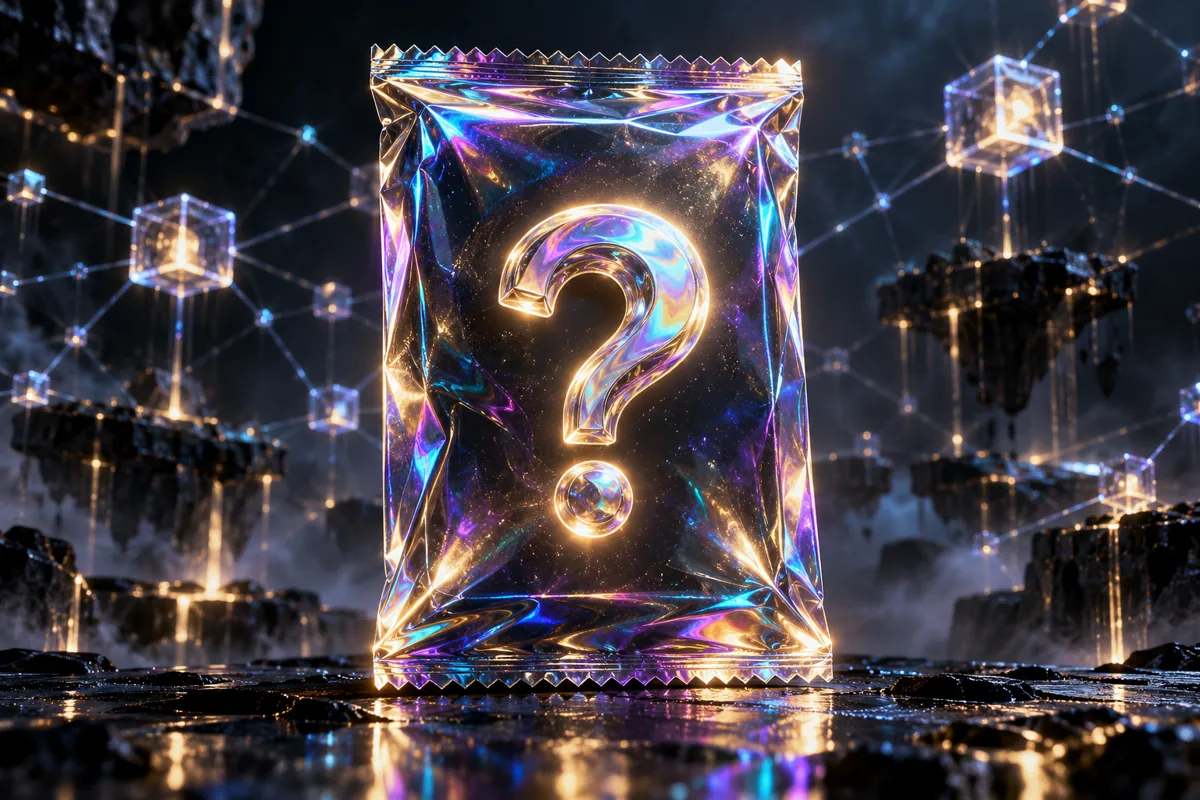
Table of Contents
If you have ever minted an NFT and seen a gray question mark or a placeholder image instead of your actual artwork, you have run into a delayed reveal. It is one of the most common mechanics in NFT drops, and it can feel confusing the first time you encounter it. This guide explains what a delayed reveal actually is, how it works under the hood, why creators choose it, and what to look for before you mint into one.
What a Delayed Reveal Means
A delayed reveal, sometimes called a blind mint, is a drop where every token looks identical at the moment of minting. Instead of seeing the specific piece you received, buyers get a placeholder image and generic metadata. The real artwork and traits are only shown later, often hours or days after the mint sells out, when the creator flips a switch and every token updates to display its actual image at once.
This is different from simply not knowing what you will get. With a delayed reveal, nobody knows which specific piece belongs to which token, including the creator, until the reveal happens. That shared uncertainty is the point of the mechanic.
How It Works on Chain
Most NFT collections store their artwork and traits off chain, commonly on IPFS or Arweave, while the smart contract only holds a pointer to that data, usually called a base URI. Before the reveal, the contract points every token to the same placeholder file. When the reveal happens, the creator updates that pointer to the real folder of images and metadata, and because the token numbers were already assigned during minting, each token suddenly resolves to its specific, already determined piece.
Many collections also publish a provenance hash before the mint opens. This is a single fingerprint generated from the full, final sequence of artwork and traits, posted publicly in advance. After the reveal, anyone can recompute that hash from the revealed files and confirm it matches what was promised, which proves the lineup was not changed or reordered after people started minting. For more on how that lineup is verified, see our guide on NFT provenance, and for how the underlying files are stored, see our explainer on IPFS and Arweave.
Why Creators Use Delayed Reveals
- Fairness between buyers. If traits and rarity were visible at mint time, buyers with faster transactions or bots could cherry pick the best pieces. A blind mint removes that advantage since nobody can see rarity in advance.
- Collector excitement. The reveal moment is often treated as an event, similar to opening a pack of trading cards, and communities frequently gather around it.
- Reduced sniping and flipping pressure. When rarity is hidden, it is harder for opportunistic buyers to immediately resell only the rarest pieces right after mint, which can make early trading calmer.
What Can Go Wrong
A delayed reveal only protects buyers if it is implemented and run honestly. A few real risks are worth knowing before you mint into one.
- No provenance commitment. If a project never published a hash or any public record of the final art lineup before minting, there is no way to later verify that the sequence was not quietly rearranged in the creator’s favor.
- Indefinite delay. Some teams announce a reveal and then push it back repeatedly with no clear reason. A reveal date that keeps slipping with no communication is a warning sign, not a neutral detail.
- Centralized or mutable storage. If the artwork sits on a server the team controls rather than on a decentralized network like IPFS or Arweave, the files behind the placeholder can technically be changed even after the reveal. Our piece on how metadata can be locked or left mutable covers this distinction in more detail.
- Treating it as a guaranteed investment. Rarity after reveal does not guarantee resale value. Buy because you like the collection and the mechanic, not because a trait might turn out to be rare.
What to Check Before You Mint Into a Blind Drop
- Look for a provenance hash or a similar public commitment posted before the mint opens, not after.
- Check whether the art and metadata are hosted on a decentralized network rather than a single private server.
- Read the contract or its documentation, when available, to see how the reveal function is triggered and whether it is controlled by one wallet with no transparency.
- Watch community channels for how previous reveals from the same team were handled, since a track record tells you more than promises.
After the Reveal
Once the switch is flipped, refresh your wallet or marketplace listing to pull the updated metadata, since some platforms cache the placeholder image for a short while. Compare the revealed traits against the collection’s published rarity breakdown if one exists, and if the project shared a provenance hash, you can independently verify it against the revealed files rather than simply trusting the announcement.
Delayed reveals are a normal and often reasonable part of minting NFTs, and understanding the mechanic makes the process far less confusing. If you are creating your own collection and want a straightforward way to mint, manage metadata, and launch a drop without writing a smart contract from scratch, the Simple NFT Creator app helps you do it from your phone. It is available on the App Store and on Google Play.