How NFT Rarity Works: Traits, Scores, and Rankings
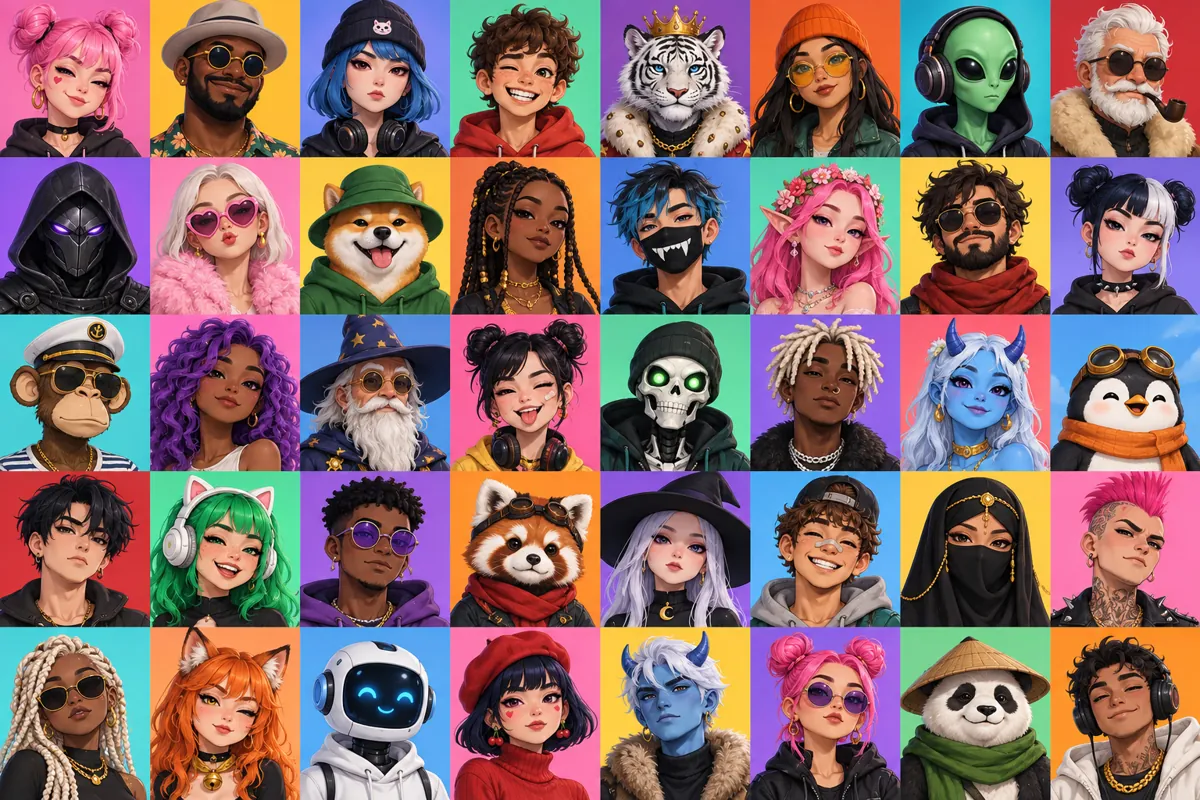
Table of Contents
What Rarity Means in an NFT Collection
When people talk about an NFT being “rare,” they are almost always talking about a generative collection: a set of images built by combining different traits, such as background, body, eyes, headwear, and accessories. Each trait comes in several variations, and the software that generates the collection mixes and matches them to produce thousands of unique combinations from a smaller set of building blocks.
Rarity, in this context, describes how uncommon a specific combination of traits is compared to the rest of the collection. It has nothing to do with how the artwork looks, how much effort went into a piece, or what a collector is willing to pay. It is a statistical property of the dataset, not a judgment about quality.
How Trait Rarity Is Calculated
The most common method is called trait count or statistical rarity, and it works in a few steps:
- For every trait category (background, eyes, hat, and so on), count how many items in the collection have each variation.
- Turn that count into a percentage. If 40 out of 5,000 items have “gold background,” that trait appears in 0.8 percent of the collection.
- Multiply or sum the rarity of each trait an item has to produce a single rarity score for that item.
- Rank every item in the collection from rarest to most common based on that score.
Trait Count vs Statistical Rarity
Two slightly different scoring methods are used across tools, and they can produce different rankings for the same collection.
The simplest method, sometimes called trait count rarity, just counts how many traits an item has compared to the average, on the idea that having more visible traits (or fewer, depending on the collection’s design) makes it stand out. The more rigorous method, statistical rarity, weighs each individual trait by how uncommon that specific variation is, then combines those weights mathematically. Statistical rarity is generally considered more accurate because it accounts for how traits are distributed across the whole set, not just how many an item happens to have.
This is why the same NFT can show up as rank 12 on one rarity site and rank 340 on another. There is no single official formula, so different tools make different assumptions.
Where Rarity Rankings Come From
Rarity information generally comes from one of two places. Some marketplaces calculate and display trait rarity directly next to a listing, pulling the data from the collection’s on-chain or IPFS-hosted metadata. Separately, independent ranking sites crawl a collection’s full metadata and publish their own scores and leaderboards, often with filtering by trait.
Because these calculations depend entirely on the metadata a project publishes, they are only as accurate as that metadata. If a collection’s trait data is incomplete, mislabeled, or updated after launch, rarity scores calculated from it will be wrong until the source data is corrected.
Why Rarity Is Not the Same as Value
It is tempting to assume the rarest item in a collection will also be the most valuable, but rarity is only one input into price, and often not the biggest one. A few things that matter just as much or more:
- Visual appeal. A trait combination can be statistically rare and still look awkward or clash visually, which tends to suppress demand.
- Cultural relevance. Traits that reference a meme, a well-known figure, or a recognizable theme inside a community can trade at a premium regardless of their rarity score.
- Liquidity and demand. A rare item that nobody wants to buy is not worth more than a common item with active bidders.
- Trait combinations, not just single traits. Some collections become known for specific pairings of traits that look good together, and the market prices that combination as a set rather than trait by trait.
Rarity scores are a useful reference point for comparing items inside the same collection, but they should never be treated as an appraisal.
Designing Traits for a Balanced Collection
If you are building your own generative collection rather than just browsing one, rarity is something you can plan for from the start rather than something that only gets calculated afterward. A few practical guidelines:
- Decide early which trait categories will have a small number of intentionally rare variations, such as a one-of-one background or a special accessory, and set their occurrence rate deliberately low.
- Avoid giving every category the same number of options with the same distribution. Collections feel more interesting when some categories have a wide spread of common to rare options, while others stay simpler.
- Check for accidental duplicates. It is easy for a random generation script to produce two items with an identical set of traits unless you build in a check that rejects exact duplicates before minting.
- Keep your trait metadata consistent and well labeled from the first item to the last, since renaming or restructuring traits mid-collection is what breaks rarity tools later.
What to Check Before Trusting a Rarity Score
Before relying on a rarity rank you find online, it helps to confirm a few basics: that the site is reading metadata from the correct, verified contract address, that the collection’s full supply has actually been indexed (some tools show incomplete rankings for very new or very large collections), and that the score is being used to compare items within the same collection rather than across different ones, since rarity scores are not standardized and mean nothing outside their own dataset.
If you are creating your own generative collection and want to see how your trait combinations come together before minting, the Simple NFT Creator app lets you build, preview, and mint NFTs directly from your phone. It is available on the App Store and Google Play.