What Does It Mean to Burn an NFT? A Beginner’s Guide

Table of Contents
If you spend time in NFT communities, you will eventually hear someone talk about “burning” a token. It sounds dramatic, and in a way it is: burning an NFT means permanently destroying it so it can never be transferred, sold, or used again. Unlike deleting a file from your computer, burning happens on a public blockchain, so the action and its result are visible to anyone who looks.
This guide explains what burning actually does at a technical level, why creators and collectors choose to do it, and what to check before you burn something you own.
What Burning an NFT Actually Means
An NFT is a token whose ownership is recorded on a blockchain, usually through a smart contract following a standard like ERC-721 or ERC-1155. Burning is the process of permanently removing that token from circulation. Once burned, the token no longer has an owner in any meaningful sense, its supply is reduced, and it cannot be recovered, resold, or transferred again.
It is important to understand that burning is not part of the core ERC-721 or ERC-1155 specifications themselves. Both standards define how tokens are created and transferred, but destroying a token is left up to each individual smart contract. In practice, most modern NFT contracts include a dedicated burn function, often based on well audited code such as OpenZeppelin’s implementation, which properly updates ownership records and emits a transfer event showing the token was destroyed.
Burn Function vs Sending to a “Dead” Address
You may have seen collectors send NFTs to addresses like 0x000000000000000000000000000000000000dEaD instead of using a formal burn function. This is a common workaround rather than the ideal method. Many ERC-721 contracts specifically block transfers to the true zero address (0x0) as a safety measure, since that address cannot hold or move tokens. To get around this, people transfer to a “dead” address instead, one with no known private key, so the token is effectively unreachable even though technically it still exists on paper.
The difference matters because marketplaces and wallets do not always treat these two methods the same way. A token removed through a proper burn function is generally recognized cleanly as gone. A token sent to a dead address may still show up in some interfaces, listed as owned by an address nobody controls, rather than being clearly marked as burned. If a project wants burning to be unambiguous, using a real burn function in the smart contract is the more reliable design.
Why Would Someone Burn an NFT?
There are several legitimate reasons collectors and creators choose to burn tokens:
- Burn to redeem mechanics. Some projects let holders burn one NFT in exchange for a new one, often an upgraded or evolved version. This pattern has been used by well known collections to move holders from an original token into a new companion collection.
- Fixing a minting mistake. If a creator mints a test token, an NFT with the wrong metadata, or a duplicate by accident, burning it removes the error from circulation rather than leaving it visible forever.
- Reducing supply intentionally. Some generative art or collectible projects burn a portion of the supply to increase scarcity for the tokens that remain, similar in spirit to a token buyback.
- Clearing spam or scam NFTs. Wallets sometimes receive unsolicited NFTs sent by scammers, often linked to phishing sites. Burning them (through a legitimate burn function, not by interacting with the scam link itself) can remove clutter, though simply ignoring or hiding them is usually safer than clicking anything associated with the airdrop.
Is Burning Reversible?
No. Burning is intentionally permanent. Once a token has been destroyed through a proper burn function, there is no built in way to restore it, and no support team to appeal to, since ownership and supply are enforced by the smart contract and the blockchain’s history, not by a central authority. Before burning anything, treat the decision as final.
What to Check Before You Burn an NFT
- Confirm the contract has a real burn function. If you are creating your own NFTs, check whether burn functionality is actually implemented rather than assuming it exists by default.
- Understand what you lose. If the NFT carries royalty rights, membership access, or utility inside a game or app, burning it removes that utility along with the token itself.
- Double check the recipient in any redemption mechanic. If you are burning a token to claim a new one through a project’s official contract, verify the contract address through the project’s own documentation or verified block explorer listing rather than a link shared in a chat or comment.
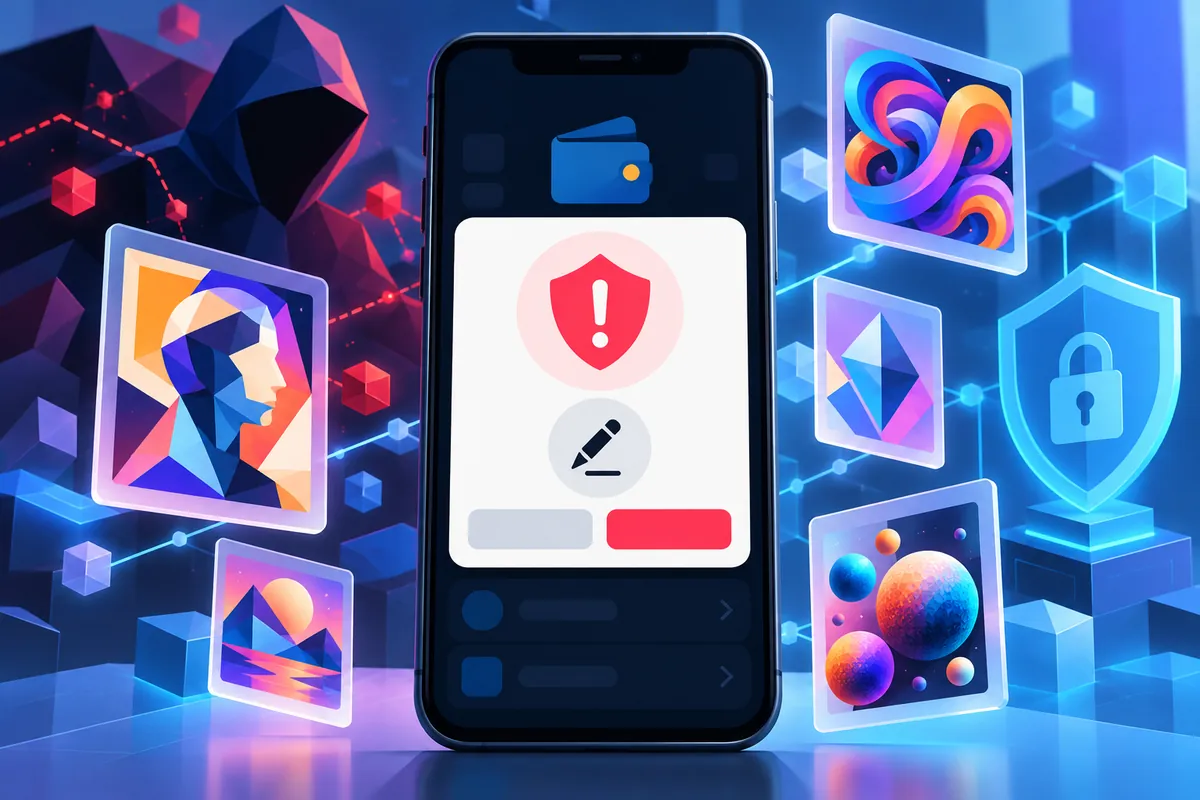
- Never burn as a reaction to a suspicious prompt. Scammers sometimes design phishing sites to trick users into signing a transaction that transfers valuable assets while disguised as a routine burn or claim. If a burn request comes from an unfamiliar site, stop and verify independently before signing anything with your wallet.
How Burning Fits Into Everyday NFT Use
For most people minting art, photography, or small collections, burning is not something you will use often. It exists mainly for cleanup, for specific redemption mechanics built by a project, or for creators who want precise control over supply. Knowing how it works, and how it differs from simply sending a token to an unrecognized address, helps you understand what is actually happening on chain rather than relying on assumptions.
If you are just getting started with creating and minting your own NFTs, Simple NFT Creator lets you mint from your phone without needing to write any smart contract code, available now on the App Store and Google Play.